
Celebrating Baba Marta Day on March 1: Traditions and Significance
- The Dancing Web

- Mar 1
- 3 min read
March 1 marks a special day in Bulgarian culture known as Baba Marta Day. This celebration welcomes the arrival of spring with unique customs and symbols that have been passed down through generations. Baba Marta Day is more than just a date on the calendar; it is a vibrant tradition that connects people with nature, community, and hope for health and happiness.
The ritual practice of twisting colored threads is said to date back more than 8,000 years and was spread across Old Europe, the Middle East, and the Indian subcontinent. Some of the earliest traditions can be traced to Paleo Balkan shamanic traditions of Siberia where woven talismans are still routinely used by the shaman — often older women – for healing and protection from evil.


The Origin of Baba Marta Day
Baba Marta, which translates to "Grandma March," is a mythical figure in Bulgarian folklore. She is believed to be a temperamental old woman whose mood swings influence the weather during early March. When Baba Marta is happy, the sun shines and spring arrives; when she is angry, cold winds and snow may still appear.
The tradition of Baba Marta Day dates back centuries and reflects the deep connection between people and the changing seasons. It is a day to celebrate the end of winter and the beginning of new life, growth, and warmth.
The Symbolism of Martenitsa
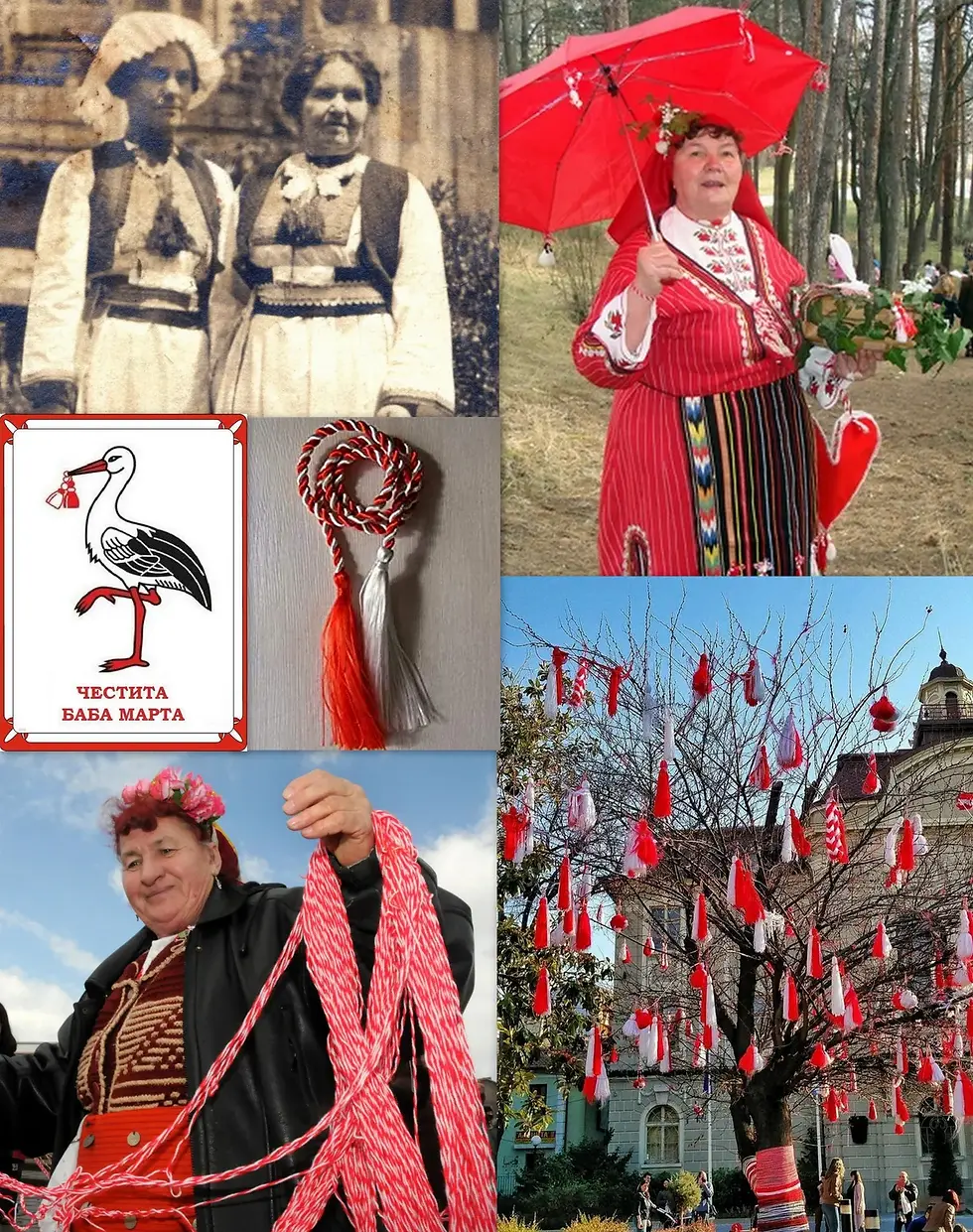
The most recognizable symbol of Baba Marta Day is the Martenitsa. These are small adornments made from red and white threads twisted together. People wear Martenitsi on their wrists, pinned to clothing, or hung in homes and workplaces.
Red symbolizes life, health, and strength.
White represents purity, happiness, and new beginnings.
Wearing a Martenitsa is believed to bring good health and protect against evil spirits. The tradition encourages people to wear these tokens until they see the first signs of spring, such as a blooming tree or a stork’s arrival. At that moment, the Martenitsa is tied to a tree branch or placed under a rock, symbolizing the release of winter and welcoming of spring.
The Lasting Message of Baba Marta Day
Baba Marta Day is a celebration of renewal, health, and community. It teaches us to appreciate the changing seasons and to support one another through symbolic gestures. The red and white Martenitsi remind us of life’s balance between strength and purity, hardship and joy.
By embracing this tradition, people welcome spring with hope and positivity. Baba Marta Day invites everyone to pause, reflect, and look forward to brighter days ahead.
March 1 is celebrated in Bulgaria, Romania, and Thrace as Baba Marta Day (Grandma March.) Baba Marta is a holiday filled with hope awakening and anticipation of the spring, fertility, and well-being. To celebrate this holiday it is custom to give friends, family, and colleagues little red and white bracelets called “martenitsa”. The red and white woven threads symbolize the wish for good health. They are the harbingers of the coming of spring and of new life. While white as a color symbolizes purity, red is a symbol of life and passion, and so some ethnologists have proposed that, in its very origins, the custom might have reminded people of the constant cycle of life and death, the balance of good and evil, and the sorrow and happiness in human life. The Martenitsa is also a stylized symbol of Mother Nature, the white symbolizing the purity of the melting white snow and the red setting of the sun, which becomes more and more intense as spring progresses. These two natural resources are the source of life. They are also associated with the male and female beginnings, and in their balance, with the need for balance in life.
Today in my region, Hudson Valley, NY, we had a great melting of snow yesterday and this morning I woke to snow coming down like it's winter. Maybe Baba Marta isn't happy with the state of my home, it certainly needs some Spring Cleaning!


Comments